Hand Knitters and Hard Data from the 1841 Hawes Census.
Yesterday, we were up at Gayle and Hawes again.
Last year, I was in Hawes at the Dales Countryside Museum, presenting along with Angharad Thomas and Ann Kingstone (The Three Tenors of glove knitting history? I’m a shoo-in for Pavarotti) at the Dales Gloves Study Day.
As part of my preparation to talk and workshop, I made some databases, number crunching the known Dales knitters from the censuses 1841-61. And it’s been some time since I made the databases but our day in rainy, beautiful Gayle and Hawes made me think that some of you, Dear Readers, might be interested to see this data I collected then put away and forgot about.
So today, let’s see what the data tells us about the knitters of Hawes.
N.B: Many people knitted for a much needed second income, but would have only reported their main occupation to the census enumerator. So a census is only a snapshot of a handful of knitters, not a full portrait of every knitter in the town/village.
Places I know from later sources were full of handknitters may show very few on the census.
My own research (published in ‘The Knitter’, 194), revealed the famous knitter of Gayle, “Molly i’ th’ Wynd’ was probably one Mary Kirkbride, née Iveson, born 1831, daughter of the village butcher. She was not even listed on the 1841 Census as a knitter. But she was still legendary for her knitting in living memory in 1949, when Misses Hartley and Ingilby researched their book.
It’s worth treating any census data with caution. That said, let’s throw caution to the wind. Or wynd.
Disclaimers over, what did the 1841 Hawes census show? I recorded any mention of knitting or hosiers. And over several villages and towns and several censuses, saw different enumerators use different language to describe them.
A further caution – many children are listed on this census with no “occupation” – “Scholar” was the common descriptor. With or without “scholar”, we can assume many of these children knitted. Kathleen Kinder’s research and that of Marie Hartley and Joan Ingilby, suggested that Dales children learned to knit around age 4 or 5. This simply wouldn’t have been seen as worth mentioning to an enumerator. We can safely assume these figures don’t come close to encompassing every Dales knitter, but give us data about a fraction of them.
Hawes was a district 1 of Aysgarth on the census. Handknitters were spread across the Aysgarth area (Upper Wensleydale) and beyond.
This enumerator categorised handknitters as “Knitter” (55 people), “Knitting” (3 people), “Knitting Stockings” (1), “Knitter of Wollen (sic) Hose” (1 person), “Worsted Stocking Knitter” (1 person), “Worsted Hose Knitter” (3 people), “Knitting Hose” (1 person), and recorded 11 as “Hosier“. There was one “Independent Hosier“. So, that’s 65 handknitters and 11 hosiers.
Altogether, we have 76 Knitters and Hosiers in a population of around 1600 people.
Drilling down on the terminology – worsted yarn was spun from longwool – so stronger, sleeker, and combed (a more wasteful and expensive process). And “woollen” was shortwool that was carded, so fluffier. Worsted stockings had a higher value than woollen.
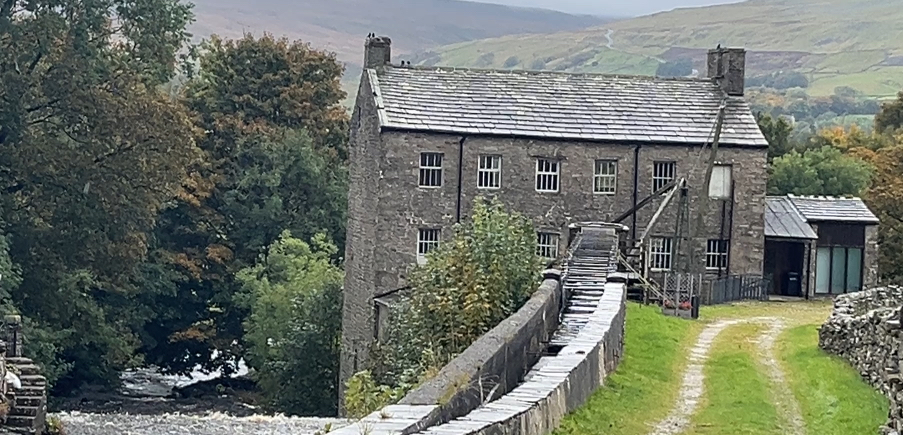
Gayle Mill, according to White’s Directory of 1840, was a “worsted mill” so we can feel fairly sure that those knitters who self described as knitting worsted stockings were likely to be supplying this mill.
When knitters were described as “hose” or “stocking knitters” we can assume that at this time, in the spring of 1841, they were currently knitting legwear. But we can’t assume that was all these individuals ever knitted. Or that those with the plain “Knitter” descriptor weren’t also making hose. Indeed, White’s Directory said: “the knit-hosiery made here, consists chiefly of sailor’s shirts, caps, jackets, drawers, etc, the knitting of which gives employment to many poor families here, and in the surrounding dale; but their wages are small, only about 3 1/2 d. being paid for knitting and scouring a pair of men’s stockings.”
The data set shows 2 male knitters out of Hawes’ 65 handknitters. Whilst this seems a low number – and is, compared to some other Dales villages I put in the database – we can assume many of the men with the descriptors “labourer”, “waller”, etc would also have knitted for spare cash. Boys, same as girls, learned to knit at an early age.
The two male knitters were “elderly” by the standards of the time – aged 54 and 65 – so the fact they’re knitting for a living may mean they could no longer make a living labouring. In “the Old Hand-knitters of the Dales’, Misses Hartley and Ingilby noted that most Gayle men eked out a living walling and labouring for the bigger farmers and relied on knitting for extra income to survive. This may not have been something an 1840s’ man would want to admit to an enumerator, though. As 1841 is the first census, I can’t find them at earlier dates to verify their original occupations. It’s also entirely possible they were knitters and nothing else. Some people seem to have been. Gayle Mill, although large, appears to have had more out-workers than in. Hawes, just down the hill, also had a large mill.
Another piece of hard data the 1841 Census can give us are knitters’ ages. Or at least, the ages of those who self described as handknitters. When it comes to Hosiers, of course, given the period, 11 out of 11 were listed as male. Smaller hosiers may well have knitted or had family members who were handknitters, too.
Of the 65 knitters, the youngest knitters were 8 year old Eleanor Bateson of Old Fold, Hawes and 8 year old Nancy Smith of Cotterdale. Eleanor’s 10 year old sister, Alice, was also listed as “Knitter”. I also recorded Occupations of knitters’ Head of Household – and the Bateson girls on Census night were recorded as living alone with their 16 year old sister, also a “Knitter”. We can only imagine the poverty and struggle in that household. The Head of Nancy Smith’s household over in Cotterdale was also a “Knitter”. It seems that if people were forced to earn by handknitting because elderly or unable to do labouring any more, they were also forced to handknit if orphaned.
Our oldest knitters on the census were 85 year old Mary Metcalfe at outlying village Thornton Rust, 81 year old Elizabeth Reynolds – who lived in a farming family, at Simonstone and Elizabeth Willan, 80, at Holm. In an age before the welfare state, some professional handknitters were widowed. Knitting seems to have been a safety net for some people and the data bears this out.
Aged 8 -19: 1o knitters
In their 20s: 13 knitters
In their 30s: 7 knitters
In their 40s: 10 knitters
In their 50s: 10 knitters
In their 60s: 14 knitters
In their 70s: 9 knitters
In their 80s: 3 knitters
From this we can see a fairly even distribution in terms of life decade, with the largest number of knitters with a need for extra income, pre- and in early marriage and during widowhood or when they could no longer labour full time.Outwork for the mill would be useful for a young women with young children at home which may explain the comparatively higher number of women in their 20s with the “Knitter” descriptor.
In terms of the Head of Household’s Occupation data I collected, most knitters and most Hosiers were reported as Head of Household (46). 2 Head of Households were “Worsted Hose Knitter” (both women), one Head was “Woolcomber”, whilst 12 year old knitter Eleanor Lambert’s Head of household was her mother “Pauper (widow)”. Five were “Agricultural Labourers”, one “Cordwainer” (shoe repairer), 7 “Farmer” and 11 recorded as “Knitter” – being someone else in the same household.This means 59 of these 76 households were mainly supported by knitting or supplying knitting, (hosiers), alone.
Not all Hawes area knitters were recorded on the 1841 Census as ‘Knitter’. I can think of one famous example.
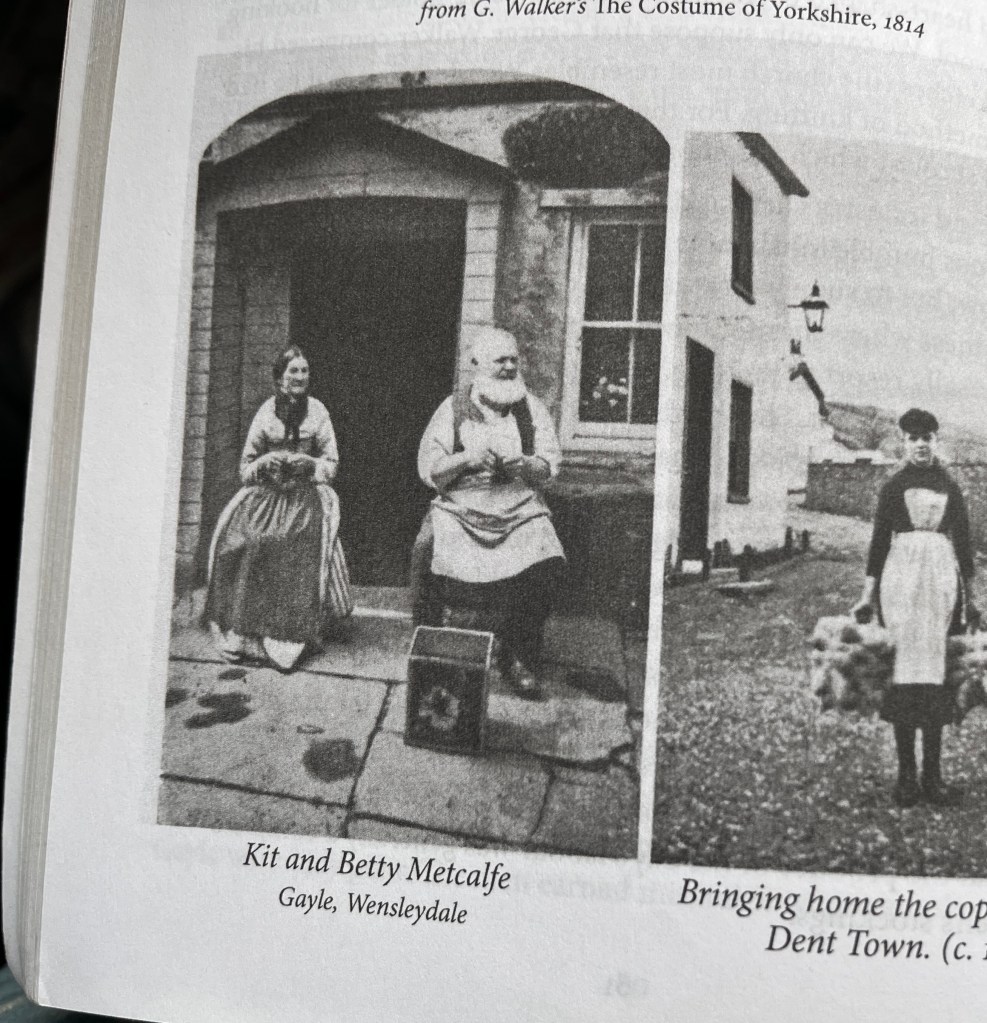
In ‘The Old Hand-Knitters of the Dales’, Misses Hartley and Ingilby described two other famous Gayle knitters, Kit and Betty Metcalfe, who
“did not knit for the mill… who used to sit on either side of their cottage door knitting cycling stockings with fancy tops… Kit used a crude winder and a sheath made by himself, and he knitted the fancy tops whilst his wife did the rest…”
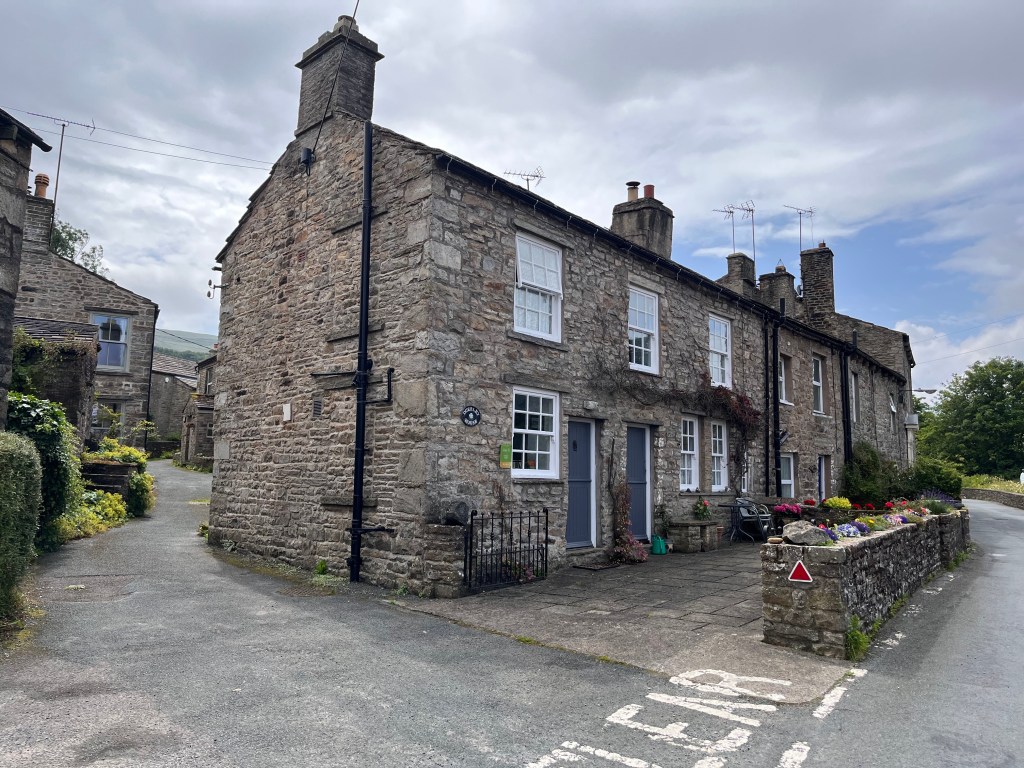
Thirteen year old Christopher Metcalfe can be found on this very same 1841 Census in Hawes, son of Thomas and Agnes Metcalfe, agricultural labourer. No-one is the household is described as “Knitter”. Although as we know Kit knitted later in life, it’s a reasonable assumption to make that his mother (née Betty Iveson), must have been a knitter and indeed there is an Elizabeth Metcalfe on later censuses, when widowed, described as “Knitter of Ruff (sic) Hosiery” and “Knitter”. In 1849, he married Elizabeth Bainbridge of Dent and two years later on the 1851 Census, Betty and Kit were living in Gayle on The Wynd, where he was “Fencer, Waller” and she was “Knitter”. In 1861, Kit was described as “Farmer of 4 acres and Stone mason”. 4 acres would mean he’d probably inherited his father’s land at Gayle, and would only provide subsistence farming so other incomes would have been needed. Betty’s occupation was undescribed.
In 1871, they were still on the Wynd and Kit was “Stone Mason”, Betty undescribed and their daughter, Ellen, 21 “Knitter of Hosiery”. The same for Kit and Betty in 1881. Although also here, a precise: “Farmer of 4 3/4 acres”. And the same again in 1891 where they are two doors down from the famous “Molly i’ th’ Wynd”.
In 1891, aged 76 they are both documented as self-employed “Stocking Knitter” – this will be the Kit and Betty remembered 60 years later by the elderly folk interviewed for ‘The Old Hand-Knitters’.
Betty was born in Dent, (then Yorkshire, now Cumbria), so was one of the famous knitters of Dent, although she lived her adult life at Gayle. Her father was a farmer/stone mason, as well. She is only listed on one census as a Knitter – and we know she was still knitting decades later – which shows the vagaries of enumerators’ descriptors.
Hopefully our sojourn with the knitters and hosiers of the 1841 Hawes Census will have shed a little hard light in a place where hard data and facts are few and far between.
The same surnames cropped up time and again, with this census and the others I looked at. In Hawes, some of the most common knitters’ surnames included Iveson, Metcalfe, Kirkbride, and Dinsdale. Driving through Wensleydale in the rain, we saw a couple of local tradespeople’s vans with some of these names on, showing descendants are still local.
Incidentally, I think I’ve identified the Metcalfes’ house on The Wynd but we’ll save that for another day.
After our day out we drove home, still under the overcast, mucky grey skies. I realised the contents of our car boot were the most Yorkshire on the planet, with a raw fleece still in there from Masham Sheep Fair the weekend before last, (safely bagged up) and some Wensleydale cheese from the Wensleydale Creamery, in Hawes, just down the hill from The Wynd.
 PENELOPE HEMINGWAY
6 replies on “Throwing Caution to The Wynd.”
where can I buy the Whitby wyrms gansey pattern? is river ganseys book (1st or 2nd ed) available to buy anywhere?
LikeLike
Hi Dee. Have replied elsewhere but will reply here, so others can see the answer, too! Happy to send you a PDF free of charge. I’ll just have to track the pattern down! I should make these available as free standalone patterns at some point but I haven’t got permissions to use the publisher’s images so would need to do photography for all the patterns, which is why they’ve never been republished. We are thinking of doing a second edition but it’s been hard for me since I’ve been disabled (yay for long covid!) to get the energy to finish that project. Am trying as we get asked for the book regularly!
I love it that people want to knit these! Thank you so much.
LikeLike
Hello Penny, Thank you for sharing this. Funnily enough, I was re-reading your ‘Molly i’ th’ Wynd’ article in the Knitter only a few days ago. I’d been moving the furniture around, hunkering down for the colder weather, when I came across 😯 another pile of ‘Knitter’ magazines. I’m easily distracted so that was me, for a while, reading again about Mary Kirkbride! 😄 Hope you are all well. Stay safe, stay warm. Lots of love Linda Barron (Armley Mills)
LikeLike
Hi Linda! Hope to see you at Armley, next year!
LikeLike
These stories are so interesting, I really appreciate your sharing the data, interpreting and photographing it!
LikeLike
Hope you’re doing well!
LikeLike